Our Bioregion

A living region
shaped by
salmon.

Salmon show us how ocean, rivers, forests, communities, economies, and cultures are connected—and why our work must happen at the scale of whole places.

Salmon Returns fire and water illustration
Illustrated Pacific salmon Water texture
01 / Why Salmon

Salmon show us how everything is connected.

Salmon are a keystone species and a living signal of bioregional health. They move from headwaters to ocean and back again, linking forests, farms, rivers, estuaries, and coastal waters into one system. Because salmon depend on the whole system to survive, they make something unmistakably clear: you cannot restore a bioregion in pieces.

Living indicator

Where salmon thrive, systems are working.

Healthy salmon runs depend on clean cold water, functioning habitat, resilient food webs, and stewardship across entire watersheds.

Shared meeting ground

Salmon connect people as well as places.

Salmon are tied to food, livelihoods, cultural continuity, local identity, and relationships that cross sectors and worldviews.

02 / The Bioregion

Salmon Nation is our home.

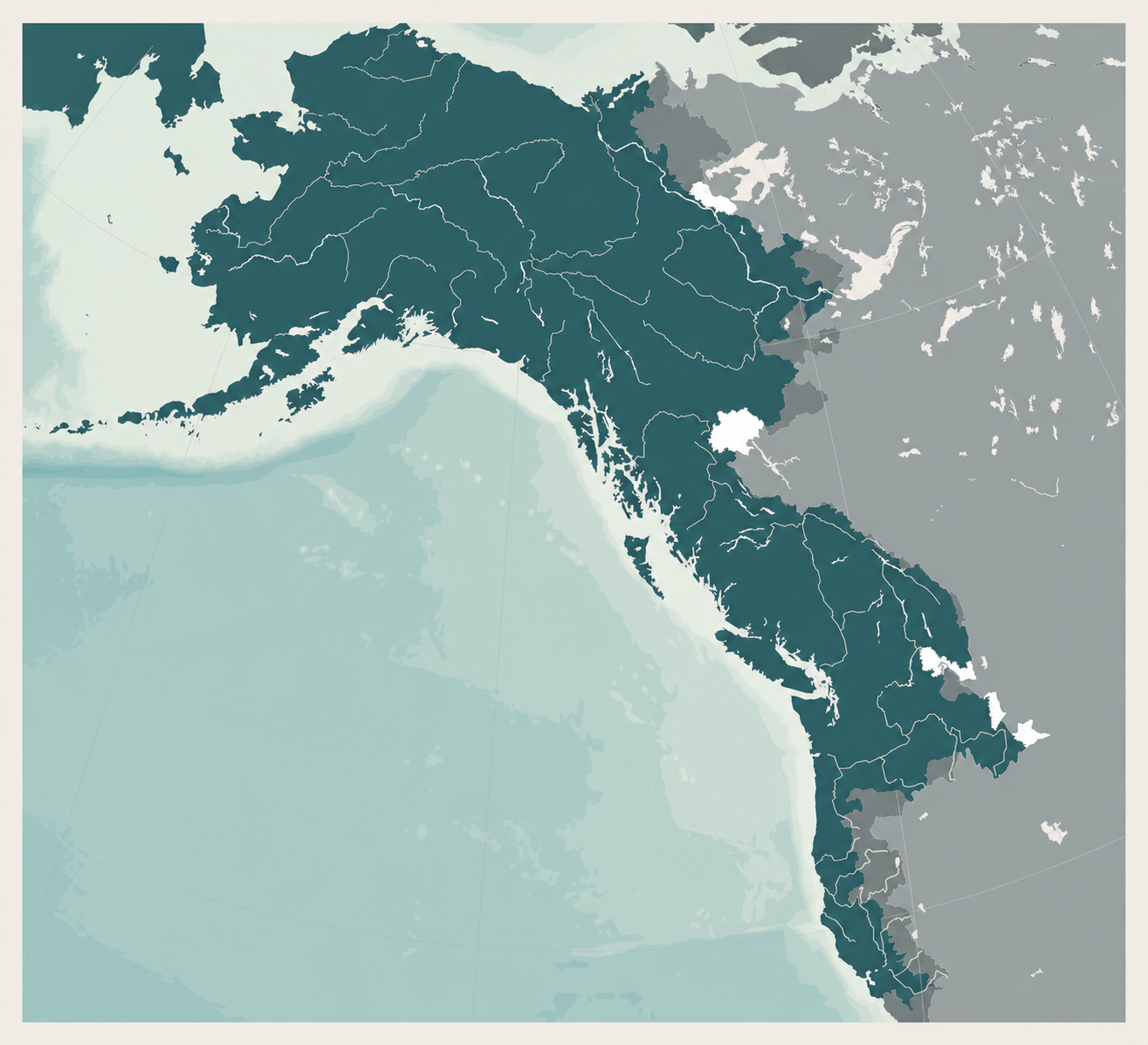
The boundaries of our work follow the traditional extent of migratory Pacific salmon rather than political borders. This geography links California, Oregon, Washington, British Columbia, Alaska, and interior watersheds through the rivers and ocean systems salmon have traveled for millennia.

Map of the Salmon Nation bioregion
03 / By the Numbers

A bioregion of uncommon scale.

Salmon Nation is a place of remarkable abundance, shaped by the movement of water, salmon, people, and ideas. Its lands, waters, cultures, and economies are deeply connected, forming a living system unlike any other.

50K+
miles of coastline

A vast living edge where forests, rivers, communities, and the Pacific Ocean meet.

Ecotrust, 2018
35M+
people call this bioregion home

We are a region of major cities, small towns, rural communities, and Indigenous Nations connected by place.

Pacific Coast Collaborative
$3T+
in annual economic output each year

This bioregion would rank as the 5th largest economy in the world.

Pacific Coast Collaborative
~1,800
miles in a single salmon migration

Yukon River salmon can travel almost 1,800 miles without feeding to reach spawning grounds.

U.S. Fish & Wildlife Service
100M+
acres of coastal temperate rainforest

Representing over 70% of all remaining coastal temperate rainforest in the world. Surpassing the Amazon in carbon storage density per acre.

The Nature Conservancy
500T+
gallons of rain and snowmelt each year

The waterways of this bioregion are the circulatory system for all the natural and human systems that have evolved here.

Ecotrust, 2018
04 / Where We Are Working

Four places. One learning system.

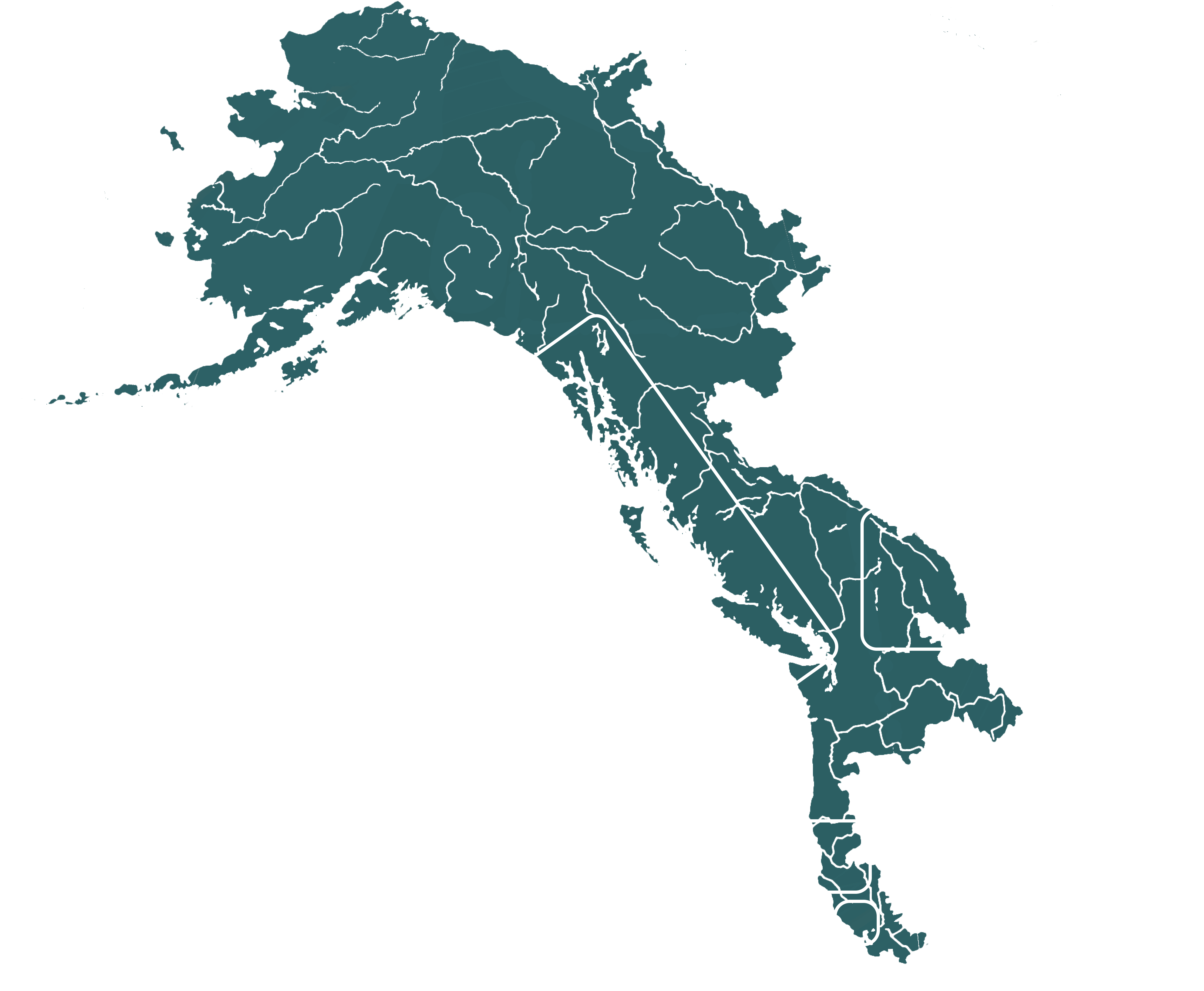
We are beginning where relationships are deep and where there is an opportunity to demonstrate what bioregional-scale economic transformation can look like. Each landscape is distinct. Together, they are a portfolio of learning across forests, food systems, salmon recovery, stewardship, water, and community wealth.

Map locating Salmon Returns focus regions
Region 01

Coastal Temperate Rainforest

A globally significant rainforest coastline where old-growth forests, rivers, and nearshore waters function as one living system. As First Nations regain stewardship authority and land rights, we support governance, stewardship capacity, and long-term finance pathways that can shift the regional economy from extraction toward regeneration.

FOCUS: stewardship · governance · biocultural finance · forest economies
Region 02

Upper Columbia River Basin

A consequential interior watershed where water governance, agriculture, hydropower, climate impacts, and salmon recovery converge. We are linking regenerative agriculture, watershed management, salmon restoration, and cultural revitalization into a whole-watershed finance approach.

FOCUS: salmon recovery · food systems · watershed finance · cultural continuity
Region 03

Klamath + Six Rivers Region

A region at a historic turning point. Following the removal of four Klamath River dams, Tribal Nations and local communities are shaping a new era of river reconnection, sovereignty, and economic renewal. We support shared infrastructure, enterprises, and workforce pathways that pair ecological recovery with durable local prosperity.

FOCUS: food sovereignty · cultural fire · restoration enterprise · community infrastructure
Region 04

Russian River Basin

A watershed where climate stress, land-use pressure, and water scarcity meet deep local innovation. We work across diverse community actors to strengthen shared governance and stewardship capacity, aligning capital around measurable long-term watershed health and resilience.

FOCUS: watershed governance · regenerative agriculture · water resilience · local economy
From place to portfolio

The bioregion is not just where we work.
It shapes how we work.

Salmon teach us to follow relationships across boundaries. Bioregional finance does the same—organizing capital around the living systems, communities, and shared infrastructure that allow a place to thrive.

Explore Our Thesis →
Salmon Returns bridge illustration